A veneer procedure is the step-by-step process of improving the front surface of your teeth with thin custom coverings. If you want a brighter, more even smile, knowing what happens at each appointment makes the whole process feel clearer, calmer, and easier to judge before you commit.
What the veneer procedure actually includes
A 2016 systematic review cited in later veneer research reported about 89% survival for laminate veneers over time, which is why planning matters so much before any tooth is touched. In plain English, the veneer procedure is a cosmetic dental treatment that usually moves through consultation, preparation, design, bonding, and follow-up.
Veneers are thin covers placed on the front of teeth to improve color, shape, size, and small spaces. Think of them like a custom-made outer layer for the visible part of your tooth, not a cap that wraps all the way around. Your timeline depends on the material you choose. Direct composite veneers often finish in one visit, while porcelain and indirect resin veneers usually take multiple appointments because a lab helps fabricate the final result.
What this means in practice: ask at the start whether your treatment is direct composite, indirect resin, or porcelain, because that answer tells you how many appointments to expect.
Appointment 1: your veneer consultation and exam
The American Dental Association states that licensed dentists should perform veneer treatment and that decay or gum disease needs treatment first. That first visit is not just a quick cosmetic chat. It is the exam that decides whether veneers make sense at all.
At this appointment, your smile goals are reviewed alongside your medical and dental history. Photos, X-rays, or digital scans may be taken. Your bite is checked, your gums are evaluated, and signs of clenching or grinding are screened because veneers placed on unhealthy or overloaded teeth do not last well.
Veneers work especially well for chips, deep staining, worn edges, small gaps, and teeth that look too small or uneven. But another option is better if the issue is major tooth damage, significant misalignment, or active gum problems. A crown makes more sense for a heavily weakened tooth. Orthodontics makes more sense if tooth position is the real issue. Gum treatment comes first if the foundation is unhealthy.
What this means in practice: bring one or two smile photos you like and one clear priority, such as whiter front teeth or closing a small gap.
Who qualifies for veneers and who should treat another problem first
A 2026 Prismoon analysis gave extra weight to conservative treatment that preserves natural tooth structure, but it also emphasized that honest consultation includes saying no when veneers are the wrong tool. That matters.
You are a stronger veneer candidate if your teeth and gums are healthy, your enamel is adequate, and your goals are cosmetic rather than structural. Active decay, gum disease, heavy clenching, deep bite problems, and major fractures need treatment first. If your tooth already needs full coverage for strength, a crown protects it better. If your bite is unstable, cosmetic work done too early turns into repair work later.
What this means in practice: choose a dentist who treats your whole mouth, not just the visible front teeth.
Appointment 2: smile planning, material choice, and tooth preparation
A 2009 British Dental Journal survey of 145 patients found no significant difference in patient-perceived cosmetic improvement between composite and porcelain veneers. Here’s how to use that: the best material is not the fanciest one. It is the one that fits your teeth, budget, and enamel-preservation goals.
Porcelain veneers are lab-made, stain resistant, and longer lasting. Direct composite veneers are sculpted directly on your teeth and usually preserve more tooth structure. Indirect resin veneers sit in the middle, made outside the mouth but generally costing less than porcelain.
Preparation is the part most people worry about. If traditional veneers are planned, a thin amount of enamel is reshaped so the veneer fits naturally instead of looking bulky. Numbing is used when needed. This step usually makes treatment not reversible, because enamel does not grow back. The question that matters most is simple: how much natural tooth will be removed?
Direct composite veneers: what happens if treatment is done in one visit
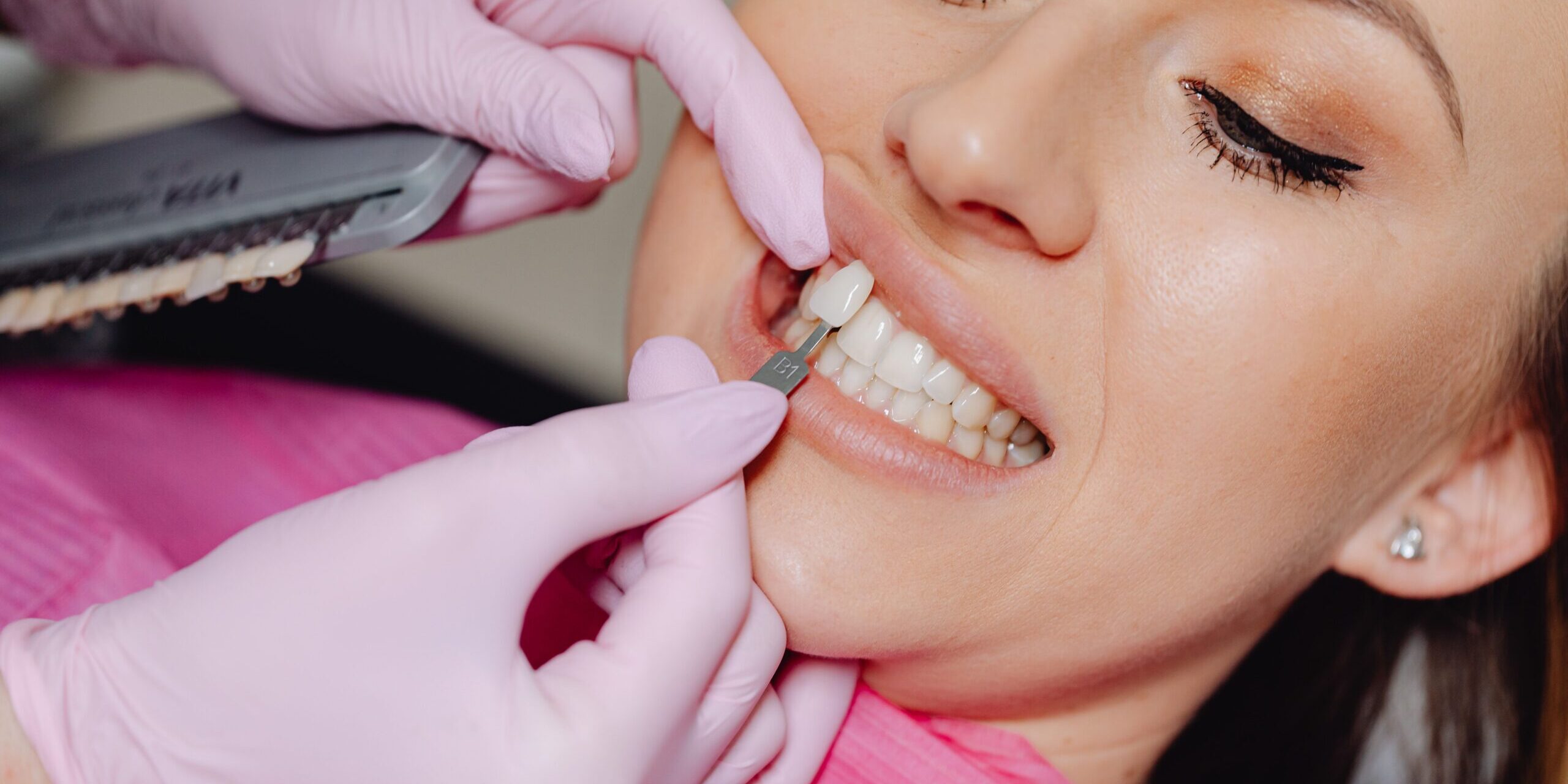
ADA coding identifies direct resin veneers as D2960, and that code usually means one visit. Your teeth are cleaned, the shade is matched, the surface is prepared, and tooth-colored resin is layered directly onto the tooth. Then it is shaped, hardened with a curing light, and polished.
The move that works here is speed with restraint. Direct composite often means less enamel removal and lower replacement cost. The tradeoff is lifespan. Expect about 5 to 7 years, and expect more staining and wear than porcelain.
Porcelain or indirect veneers: what happens after teeth are prepared
ADA codes D2961 and D2962 cover indirect resin and porcelain laminate veneers, and those usually require multiple visits. After preparation, impressions or digital scans are taken along with bite records and shade information. Then the case goes to a lab, where the final veneers are made to fit your teeth and smile design.
If enough enamel was reduced, temporary veneers are often placed. Those temporaries protect prepared teeth and give you a preview of shape and length while the final veneers are being fabricated.
Between appointments: temporaries, lab work, and how to protect your teeth
A 2018 review cited in veneer outcome research reported about 96% survival at 10 years for minimal-preparation designs, which tells you the lab phase is not cosmetic fluff. Precision here affects fit, strength, and the way your veneers blend with natural teeth.
While you wait, the lab builds shape, translucency, and contours from scans or impressions. If you leave with temporaries, expect them to feel slightly different from final veneers. Mild sensitivity, small speech adjustments, and extra awareness of the front teeth are normal at first.
What this means in practice: avoid hard or sticky foods until final bonding is complete.
Final placement appointment: trying in and bonding the veneers
Long-term data on glass-ceramic veneers shows roughly 95% survival over a decade, but that result depends on a precise bonding appointment. This is where appearance and function come together.
If you have temporaries, those are removed first. Each veneer is tried in and checked for fit, color, shape, and edge detail. Small adjustments are made before bonding. Then your tooth surface is cleaned and conditioned, adhesive is applied, the veneer is placed, and the bond is cured with a light. After that, final polishing and bite adjustment happen.
This is also when your bite gets refined so the veneers do not take too much pressure when you chew or grind. Speak up before final bonding if length or shape feels off. That is the easiest point to refine the result.
Follow-up appointment: bite check, comfort, and early adjustments
A 2026 veneer clinic analysis weighted aftercare and follow-up because long-term success depends on more than placement day. That logic is sound even if you never travel for treatment. Veneers need a short recheck.
At the follow-up, your gum response, flossing contact, bite pressure, edge smoothness, and any sensitivity are evaluated. Tiny adjustments can make a big difference in comfort. This is why staying with a true dental home matters. If the same office handles maintenance, small issues get solved early.
What normal recovery feels like and what needs a call right away
Normal early recovery includes mild sensitivity, awareness of new edges, and brief speech adjustment. Those settle as your mouth adapts.
A high bite, sharp pain, a loose veneer, or gum irritation that does not calm down needs prompt attention. For anxious patients, this section is the reassuring part: early adjustments are common, fast, and usually simple.
How long veneers last and what protects your investment
Direct composite veneers usually last 5 to 7 years. Porcelain veneers often last 10 to 15 years. Daily habits matter as much as material choice.
Grinding, nail biting, opening packages with your teeth, poor brushing and flossing, untreated gum disease, and skipped checkups shorten veneer life fast. Use a nonabrasive toothpaste, floss daily, keep exams on schedule, and wear a night guard if prescribed. What this means in practice: the simplest version of this is protecting your bite every night and your gums every day.
Veneers compared with crowns, bonding, whitening, and orthodontics
A 2015 statement from British dental societies warned that invasive cosmetic treatment removes healthy tooth structure and should not be the default when a simpler option works. That is the right standard.
Veneers are the right tool when you want to improve visible front-tooth color, shape, and minor spacing while preserving most of the tooth. Crowns fit heavily damaged teeth that need strength. Bonding fits small chips and quick repairs. Whitening fits color-only concerns. Orthodontics fits alignment problems. The move that works is the most conservative treatment that gets your result.
What to ask before you schedule your veneer procedure
Research on treatment planning keeps coming back to two questions: how much natural tooth will be removed, and how follow-up will be handled after placement. Ask both.
Then ask which material fits your goals, how many appointments you will need, whether temporaries are included, and how bite adjustments are managed if something feels high afterward. A veneer procedure should feel organized, not vague.
Book a cosmetic consultation this week, and bring one photo of a smile you like plus one concern you want fixed first.
Frequently asked questions
How many appointments does a veneer procedure take?
Direct composite veneers often take one visit. Porcelain and indirect resin veneers usually take three appointments: consultation, preparation, and final placement, plus a short follow-up.
Do veneers require shaving your teeth?
Traditional veneers usually require removing a thin amount of enamel so the veneers fit naturally. Minimal-prep options remove less, but veneers are still generally not reversible once enamel is removed.
Does the veneer procedure hurt?
Numbing keeps preparation comfortable. After treatment, mild sensitivity or awareness of the teeth is normal for a short time.
Are temporary veneers always needed?
No. Temporary veneers are most common when porcelain or indirect veneers are being fabricated after tooth preparation. Direct composite veneers usually do not need temporaries.
What if veneers are not the right treatment for you?
If you have decay, gum disease, heavy grinding, major tooth damage, or significant alignment problems, another treatment should come first. That often means gum care, a crown, orthodontics, or bonding instead of veneers.
How do you know if a veneer feels wrong after placement?
A veneer needs adjustment if your bite feels high, you feel a sharp edge, the tooth hurts when you bite, or the veneer feels loose. A prompt follow-up fixes these issues before they become bigger problems.