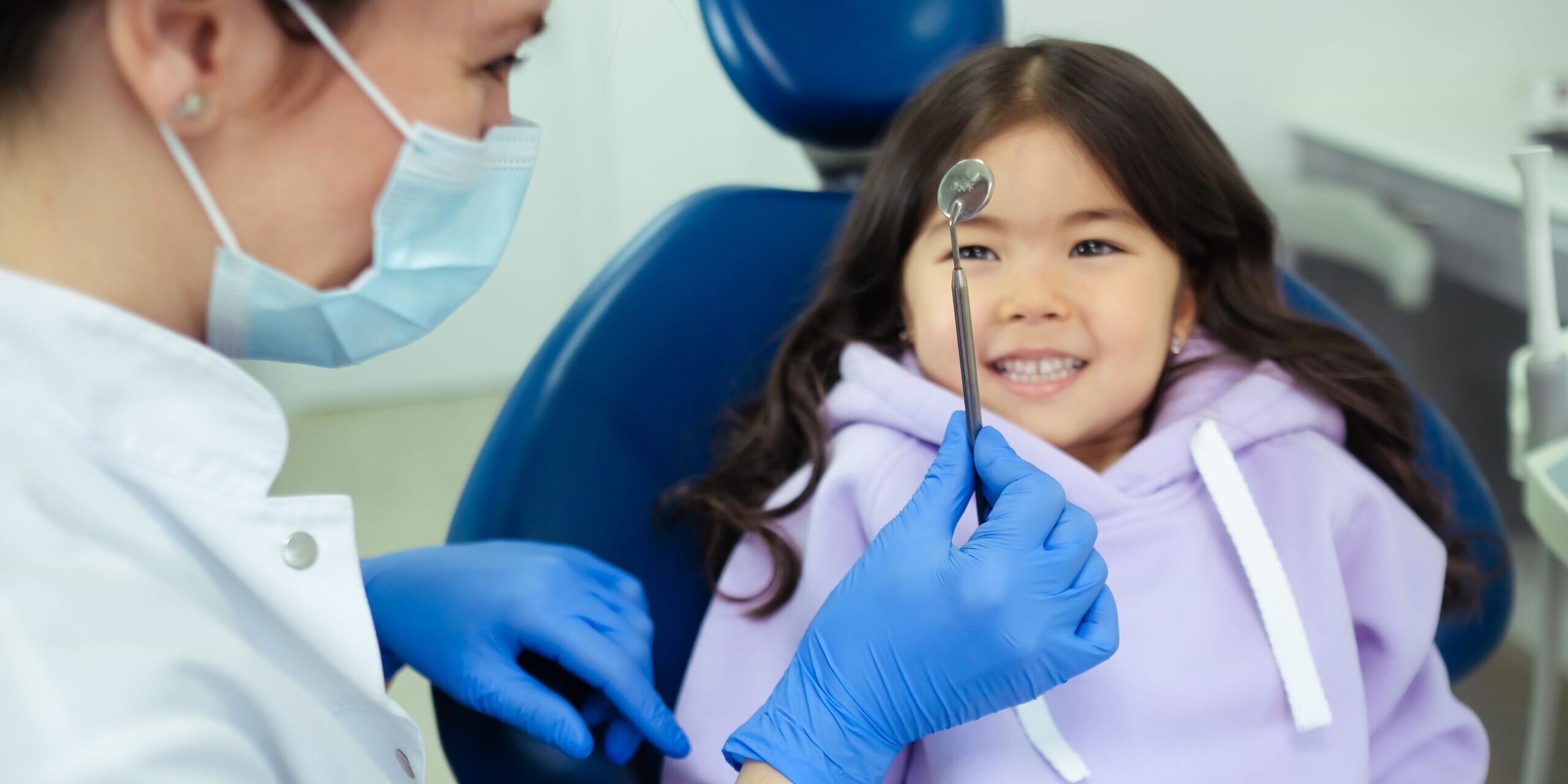
A pediatric dental exam is a preventive checkup that looks at far more than teeth alone. With 46.0% of children ages 2 to 19 having untreated or restored cavities, knowing what happens at this visit matters because early, calm care prevents bigger problems and helps your child feel safe in the chair.
What a pediatric dental exam includes
A 2023 CDC summary found that 86.9% of U.S. children ages 2 to 17 had a dental visit in the past year. That sounds reassuring, but tooth decay remains common, which tells you something important: showing up once is not the whole story. The exam works best when it is part of steady prevention.
In plain English, a pediatric dental exam is a checkup built for a growing mouth. Your child’s dentist looks for cavities, gum irritation, plaque buildup, enamel defects, bite problems, eruption patterns, jaw development, and habits such as thumb-sucking or mouth breathing. The visit also includes guidance for brushing, diet, fluoride, and any next steps that keep a small issue from becoming a bigger one.
What this means in practice is simple. The exam is not just a search for damage. It is the move that works for preventing damage early.
Why early exams matter for your Child’s health
A CDC analysis covering 2017 through March 2020 found that 46.0% of U.S. children ages 2 to 19 had untreated or restored dental caries. That is nearly half of children. Waiting until your child complains about pain is too late, because cavities and gum problems usually start quietly.
Baby teeth matter because your child uses them every day for chewing, speech, comfort, and holding space for permanent teeth. A small untreated cavity can turn into pain at meals, sleep disruption at night, and a more complicated treatment plan later. Early exams catch the issue while it is still small and easier to manage.
Here’s how to use that information: treat preventive visits as part of your child’s health routine, not as something reserved for emergencies.
Why baby teeth deserve real attention
A 2025 parental awareness study of 502 parents found that 89.6% understood an infection in a primary tooth can affect the permanent tooth underneath. That instinct is correct. Baby teeth are not disposable practice teeth. They guide spacing, help the jaw develop properly, and support clear speech and comfortable eating.
The common mistake is assuming a tooth does not need care because it will fall out anyway. That idea leads straight to avoidable pain, premature tooth loss, shifting teeth, and harder treatment later. If a baby tooth becomes infected or breaks down badly, your child still needs treatment.
The action that keeps this simple is to schedule the first visit by age 1 or when the first tooth appears. If timing still feels fuzzy, start with this guide to your child’s earliest checkup.
How repeated visits reduce fear over time
A 2026 Hong Kong longitudinal study of 300 kindergarten children found that dental fear decreased over 18 months with repeated, familiar exams, and cooperation improved significantly on behavior scales. That result matters because fear often grows when the first dental visit happens during pain or after an injury.
What this means in practice is straightforward: routine, low-stress visits build comfort better than one dramatic visit in the middle of a problem. Your child learns the sounds, the chair, the mirror, and the rhythm of the appointment. Familiarity lowers resistance.
The move that works is consistency. Keep regular exams even when everything seems fine.
When to schedule a Child’s dental exam
An AAPD-backed preventive model, supported by early-life dental care research, recommends establishing a dental home early. A systematic review of seven randomized controlled trials found that early-life interventions reduced caries risk, especially when families received repeated oral health guidance. Prevention starts earlier than most parents expect.
The recommended timeline is clear: schedule the first exam by the first birthday or when the first tooth erupts, then keep regular checkups after that. For many children, that means every six months. Higher cavity risk, enamel defects, orthodontic concerns, or active habits such as prolonged bottle use can make more frequent visits the right call.
If your child has pain, swelling, a dark spot, a chipped tooth, bleeding gums, bad breath that does not clear, or delayed tooth eruption, the visit is due now. Do not wait for the next routine cleaning window.
First visit timeline by age
A 2025 parent survey found that only 60.4% believed the first dental visit should happen at age 1, while many delayed until symptoms showed up. That delay is where preventable problems begin.
For infants, the visit is about eruption, feeding, fluoride, and home care. For toddlers and preschoolers, the focus expands to cavity detection, habits, and comfort in the chair. For school-age children, regular recalls track baby teeth falling out, permanent teeth coming in, and cavity risk between teeth. For teens, the exam often includes gum health, wisdom tooth monitoring, sports protection, and extra attention around braces or aligners.
The practical takeaway is easy: once the first visit happens, put future exams on a repeating schedule instead of deciding one visit at a time.
Signs a visit is overdue
A 2025 study found that 85.5% of parents would seek dental care for primary tooth pain, but 10.4% would medicate and wait. Waiting is the wrong move. Dental pain usually means the problem is already advanced enough to affect the nerve, gum tissue, or surrounding tooth structure.
If your child has sensitivity, visible holes, white or brown spots, gum bleeding, facial swelling, persistent bad breath, or any mouth injury, book an exam promptly. Pain is not a monitor-at-home situation.
What this means for you is firm and simple: symptoms need evaluation, not delay.
What happens at the appointment, step by step
AAPD educational content for pediatric dentists emphasizes prevention, growth and development, behavior guidance, oral pathology, trauma assessment, and care for children with special health needs. That broad focus explains why a pediatric dental exam feels more detailed than a quick tooth count. The point is to understand your child’s whole oral health picture.
Health history and conversation with you
A 2025 parental awareness study found that knowledge and follow-through varied sharply by education and income, which is exactly why the conversation part of the exam matters. Your answers help shape the visit.
Expect questions about medical conditions, medications, allergies, fluoride exposure, brushing routines, snacks and drinks, bottle or nursing habits, thumb-sucking, pacifier use, grinding, mouth breathing, past dental visits, and any anxiety or sensory needs. If your child had a hard medical or dental experience before, say so clearly. That changes how the appointment is paced and explained.
The action here is simple: bring updated health information and be direct about what your child finds difficult.
Gentle look at teeth, gums, bite, and growth
A 2026 AAPD review course lists growth and development, space management, caries assessment, behavior guidance, and interceptive orthodontics as core pediatric topics. That tells you what the exam is really checking.
Your child’s dentist examines the teeth for cavities, weak enamel, wear, and staining. The gums are checked for inflammation. Bite alignment, jaw growth, eruption order, crowding, oral tissues, tongue position, and signs of grinding or mouth breathing all matter. This is not just about visible decay. It is also about whether the mouth is developing normally.
Here’s the practical bridge: even if every tooth looks clean to you, the exam can still catch growth, bite, or tissue problems early.
Cleaning, fluoride, and preventive care
A 2025 parent study found that only 52.2% of parents knew fluoride and fissure sealants help resist decay. That gap matters because prevention works best before a cavity forms.
If your child is due for a cleaning, plaque and tartar are removed and brushing is reviewed. Fluoride varnish strengthens enamel and makes teeth more resistant to acid attacks from food and bacteria. Sealants protect the grooves of back teeth, where decay often starts because those narrow pits trap food and are hard to brush thoroughly.
What this means in practice: accepting preventive care during the visit lowers the chance that your child returns for a filling or crown.
X-rays: when your child needs them and when your child does not
CDC data also show 13.2% of children ages 5 to 19 had untreated cavities, which helps explain why visual exams alone are not always enough. Some decay starts between teeth or below the surface, where no mirror can see it.
X-rays are not automatic at every visit. The decision depends on your child’s age, cavity risk, tooth spacing, symptoms, trauma history, and whether the dentist needs to see developing teeth or bone levels. Modern dental X-rays use very low radiation and are taken only when the image will change diagnosis or treatment planning.
The practical takeaway is this: if X-rays are recommended, there is a specific reason, not a routine box being checked.
How a Child’s dental exam differs by age
A 2026 Hong Kong study found that repeated familiar exams improved cooperation over time, and age and untreated decay influenced behavior during appointments. That matters because a successful visit does not look the same at every stage of childhood.
Infants and toddlers
For babies and toddlers, the exam is short and focused. Knee-to-knee positioning is common, which keeps your child secure while allowing a quick, safe look at the mouth. The dentist checks eruption, early decay, gum health, lip and tongue tissues, and feeding-related risks. Bottle use at bedtime, brushing with fluoride toothpaste, and habit guidance are part of the visit.
Crying does not mean failure. Success at this age means a safe exam, clear guidance for you, and a positive baseline for next time.
Preschool and school-age children
A 2026 AAPD educational program highlights behavior guidance and prevention as central parts of pediatric care. That shows up clearly in this age group. Appointments become more interactive, with your child opening wide, following simple directions, and often completing a cleaning and fluoride treatment.
The exam checks cavities, including between teeth when needed, monitors the bite, and reviews snacks, brushing technique, and sports safety. If you want a broader overview of care built for growing smiles, this stage makes that especially clear.
The key point is to judge the visit by progress, not perfection. Cooperative habits build over time.
Teens and orthodontic years
Teen exams cover the basics, but the focus often widens. Wisdom teeth are monitored, gum inflammation becomes more common, sports drinks and frequent snacking raise decay risk, and braces or aligners create more plaque traps.
This is also the stage when smile confidence starts to matter more. Questions about whitening, shape, crowding, and long-term cosmetic planning often begin here. A good exam balances health, function, and appearance without treating them as separate issues.
The action for this age is direct: do not assume older kids can manage oral care alone. Supervision drops long before plaque does.
How to prepare your child for a better visit
A 2026 longitudinal study found that repeated familiar exams improved preschool cooperation over time. Preparation helps because uncertainty is what drives a lot of resistance.
What to say before the exam
Use short, truthful language. Say the dentist will count teeth, look at the smile, maybe take pictures, and clean away sugar bugs. That works better than vague reassurance or loaded phrases like “it won’t hurt.”
Do not threaten the appointment, bargain around fear, or tell bad stories from your own childhood. Your child does not need your dental history. Your child needs a calm script.
The practical action is to rehearse one simple explanation the night before and repeat the same words on the way in.
What to bring and how to time the appointment
A tired, hungry child has less patience for anything, including a gentle exam. Appointment timing matters more than most parents realize.
Bring insurance information, medication updates, and a comfort item if your child uses one. Schedule the visit at your child’s best time of day, after food and rest, not during a usual nap or right before a meal. Cooperation improves when fatigue and hunger are not in charge.
The move that works is choosing the slot that fits your child’s rhythm, not the first opening on the calendar.
Common questions parents ask during a pediatric dental exam
A 2025 parent survey found that awareness of pediatric dental care was uneven, especially around prevention and timing. That is why a few common questions come up at almost every first visit.
Can you stay in the room with your child?
Yes, parent presence is often allowed for exams. The exact approach depends on your child’s age, attention, and what helps the appointment go smoothly. Sometimes your calm presence helps. Sometimes a child focuses better once given a little independence.
The goal is teamwork, not rigid rules. The best setup is the one that helps your child feel secure and cooperate.
What if your child cries, resists, or feels anxious?
A 2026 Hong Kong study found that repeated familiar visits reduced fear and improved cooperation over time. So if your child cries at the first visit, that is not unusual and it does not mean dental care is doomed.
Gentle behavior guidance is part of pediatric care. Short explanations, praise, distraction, and a predictable routine all help. Consistency, not perfection, builds comfort.
Will your child need treatment after the exam?
Possibly, even without pain. Findings can lead to monitoring, fluoride, sealants, fillings, crowns, habit counseling, or referral for orthodontic evaluation. No pain does not mean no disease. Early cavities, bite issues, and enamel defects often cause no symptoms at all.
The takeaway is simple: the exam is where small needs get identified before they turn into urgent ones.
How much does a pediatric dental exam usually cost?
Cost varies by office, insurance coverage, whether X-rays are needed, whether a cleaning is included, and whether preventive treatments such as fluoride or sealants are done that day. But prevention is always less expensive than delayed treatment.
The value goes beyond one appointment. Regular exams help you establish a long-term dental home, which improves follow-through and reduces emergency care.
Choosing a dental home for long-term care
A systematic review of seven randomized trials found that early-life interventions reduced caries, especially when oral health information was repeated over time. That finding supports the idea of a dental home: one consistent place where your child receives exams, prevention, treatment, and guidance as needs change.
A dental home matters because continuity makes everything easier. Records stay in one place. Growth patterns are tracked over time. Anxiety is easier to manage when the setting is familiar. Treatment decisions are clearer when the team already knows your child’s history, habits, and risk factors.
What to look for in a family-friendly dental office
Look for clear communication, a prevention-first approach, patient explanations that make sense, and a calm environment for anxious children and adults. A strong office also coordinates broader care as needs grow, including fillings, crowns, gum treatment, trauma care, orthodontic referrals, and cosmetic planning.
What this means in practice is consistency. One trusted dental home improves follow-through because you are not starting over at every visit.
What to do this week before your Child’s exam
The simplest version of prevention is the one that gets done. Call and schedule your child’s next pediatric dental exam, then write down one question about fluoride, sealants, habits, or anxiety to bring to the visit. That single step protects your child’s smile now and builds trust that lasts for years.
Frequently asked questions
How long does a pediatric dental exam usually take?
A routine exam often takes 20 to 45 minutes, depending on your child’s age, cooperation, whether X-rays are needed, and whether a cleaning or fluoride treatment is included.
Does every child get a cleaning at the exam?
Not always, but many do. The timing depends on age, buildup on the teeth, and how the appointment is structured. Infants and very young toddlers often have a shorter preventive visit focused more on exam and coaching.
Are dental x-rays safe for children?
Yes. Modern dental X-rays use very low radiation and are taken only when the image helps diagnose something that cannot be seen directly, such as cavities between teeth or developing permanent teeth.
What if your child has special sensory or behavioral needs?
A good pediatric exam can be adjusted for pace, language, lighting, positioning, and breaks. Sharing those needs before the appointment helps the dental team plan a calmer, more successful visit.
How often should your child have a dental exam?
For many children, every six months is standard. Higher cavity risk, orthodontic concerns, enamel defects, gum issues, or active dental treatment can make more frequent visits the right schedule.