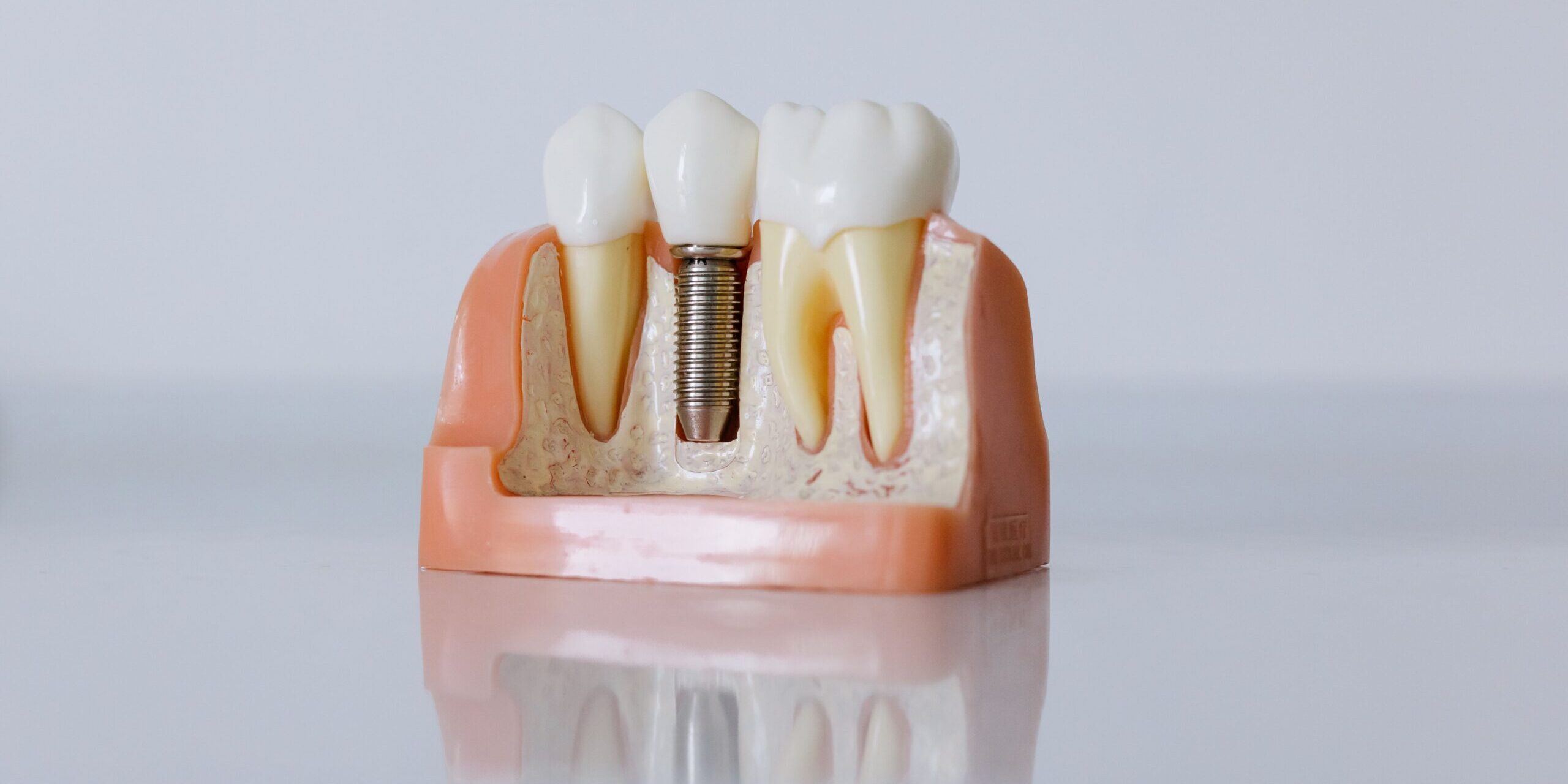
Tooth loss is common, and the right fix depends less on brand names than on your exact pattern of missing teeth. When people search for types of dental implants, they usually mean three practical choices: a single implant for one tooth, an implant-supported bridge for several teeth in a row, or a full-arch restoration for most or all teeth in one jaw. This guide breaks down each option, what it solves, and how to tell which one fits your smile.
What are the main types of dental implants?
A 2018 analysis of U.S. NHANES data found that implant use among adults with missing teeth rose from 0.7% to 5.7% over the study period. That jump matters because implants are no longer a niche treatment. They are a mainstream way to replace missing teeth with a fixed solution that supports your bite and helps protect bone.
In plain English, the main types of dental implants are usually defined by the restoration format that matches your tooth loss pattern. If one tooth is missing, the choice is usually a single implant crown. If several teeth are missing next to each other, the choice often becomes an implant-supported bridge. If most or all teeth are missing in the upper or lower jaw, full-arch treatment becomes the relevant category. What this means in practice: start with the shape of the problem, not the marketing label.
The simplest way to think about your options
A single missing tooth is one problem. Three adjacent missing teeth are a different problem. An entire arch of failing or missing teeth is a completely different treatment category.
That sounds obvious, but it clears up most confusion immediately. One missing tooth usually points to one implant with one crown. Several neighboring missing teeth often point to a bridge supported by two or more implants. Most or all teeth missing in one jaw points to a full-arch option such as All-on-4 or All-on-X. The move that works is to match the treatment to the span you need to replace.
Implant type vs. implant material vs. implant placement
These are separate decisions, and mixing them together makes implant research harder than it needs to be.
Treatment format means single implant, bridge, or full-arch. Material means titanium or zirconia. Placement design means endosteal, subperiosteal, mini, or zygomatic. Those are different layers of the same plan, not competing answers to one question. If you keep those categories separate, every consultation gets easier to follow.
Single-tooth dental implants
The clinical literature consistently describes implants as a predictable way to replace missing teeth, with a major advantage over older options: they preserve neighboring tooth structure and support bone rather than relying on adjacent teeth for support. A single-tooth implant does exactly that. It uses one implant post, one connector, and one custom crown to replace one missing tooth.
That matters because losing one tooth does not mean sacrificing two healthy teeth beside it. A traditional bridge often requires reshaping neighboring teeth to hold the restoration. A single implant avoids that tradeoff.
When a single implant is the right move
A single implant is the right move when one tooth is missing, your surrounding gums are healthy, and the area has enough bone support for secure placement. It is also the cleanest option when the teeth beside the gap are intact and free of large fillings or crowns.
Here’s how to use that in a real appointment: ask one direct question. Are the teeth next to the gap healthy enough that preserving them should be the priority? If the answer is yes, a single implant usually becomes the strongest long-term choice.
Pros, limits, and what you give up if you skip it
A single implant gives you a fixed tooth that feels close to natural when you chew and smile. You can floss around it more naturally than around many bridge designs, and the bone in that area gets functional stimulation instead of being left to shrink. Cosmetic results are also strong because the crown is customized to fit your bite and match nearby teeth.
The limits are real. Treatment takes time, healing matters, and some sites need grafting before or during placement. Upfront cost is also higher than the cheapest alternatives.
Still, skipping a single implant has a cost of its own. If you choose a tooth-supported bridge instead, you give up healthy tooth structure next door and leave the missing root area without the same bone support. If one tooth is missing, ask for a side-by-side comparison with a tooth-supported bridge so you can see exactly what you gain and what you sacrifice. For a broader overview of the process, see how implant treatment usually unfolds from start to finish.
Implant-supported bridges for several missing teeth
Mayo Clinic notes that one implant can replace several teeth when replacement teeth are connected as a bridge. That is the key idea behind an implant-supported bridge. Instead of placing one implant for every missing tooth, your dentist can use two or more implants to support several connected replacement teeth.
This is the bridge option for a gap that is too large for a single crown but not extensive enough for full-arch treatment. It gives you a fixed result without depending on natural teeth for support.
How an implant bridge works
The structure is simple once you picture it. Implants act like support posts. The replacement teeth between them are connected into one bridge. That means a three-tooth gap does not automatically require three implants.
This matters for both efficiency and cost. Fewer implants can mean less surgery, less healing time, and a more practical treatment plan while still giving you stable chewing function.
When a bridge makes more sense than multiple single implants
An implant bridge makes more sense when several teeth are missing side by side and the span can be predictably supported with fewer implants than teeth. Bone availability matters. Bite force matters. The location in your smile matters too, especially in visible front areas where esthetics and gum contours need tight control.
Budget also matters, and there is no reason to pretend otherwise. If several adjacent teeth are missing, an implant bridge often lands in the middle ground: more involved than one single implant, less extensive than placing separate implants for every tooth, and far less than a full-arch case.
The practical takeaway is direct: if your missing teeth are next to each other, ask whether a bridge gives you the same fixed result with fewer implants and less surgery.
Implant bridge vs. traditional bridge
A traditional bridge rests on natural teeth. An implant-supported bridge rests on implants. That difference changes everything.
With a traditional bridge, the supporting teeth usually need to be cut down. With an implant bridge, healthy adjacent teeth stay untouched. A traditional bridge also does not replace the missing root, so the bone beneath the gap still tends to shrink over time. An implant bridge offers better long-term support for the ridge.
Cleaning is different too. Both require care, but implant bridges avoid the problem of overloading natural teeth that were never meant to carry a large prosthetic span. If your concern is long-term tooth preservation, implant support usually wins that comparison decisively.
Full-arch dental implants: fixed teeth for most or all missing teeth
According to WHO-based data summarized by Grand View Research, complete tooth loss affects about 23% of adults age 60 and older worldwide. That is one reason full-arch treatment has become such a major focus in modern dentistry. When most or all teeth in an upper or lower jaw are missing, or failing badly enough to need replacement, full-arch treatment becomes the category that matters.
A full-arch restoration is a fixed implant-supported set of teeth for one entire jaw. This includes concepts such as All-on-4 and All-on-X, where strategically placed implants support a complete upper or lower arch.
All-on-4, all-on-x, and implant-supported dentures
Full-arch is the broad category. All-on-4 is one specific version inside that category, using four strategically placed implants to support a full set of teeth. All-on-X means the same general concept, but with the exact number of implants customized to your anatomy and treatment goals.
This is also where fixed and removable options split apart. A fixed full-arch prosthesis stays in place and is only removed professionally. A removable implant overdenture attaches securely to implants but can be taken out for cleaning or repair. Mayo Clinic describes these removable options as dentures that snap onto implant attachments for added stability. The simplest version of this distinction is easy to remember: full-arch does not automatically mean fixed.
Who benefits most from full-arch treatment
You benefit most from full-arch treatment when your problem is bigger than a few missing teeth. That includes advanced tooth loss, multiple failing teeth, unstable dentures, severe chewing limitations, and frustration with a smile that no longer feels reliable.
What this means in practice is straightforward. If your denture slips, if you avoid certain foods, or if you feel like your teeth are failing as a group rather than one at a time, full-arch treatment changes daily function, not just appearance. If that is your situation, it helps to compare fixed full-arch options in more detail before making a final decision.
Key tradeoffs in full-arch cases
A 2024 review of full-arch options reported implant survival above 95% survival for implant-supported fixed complete dentures, with strong prosthetic survival as well. That is the upside. Full-arch treatment can restore stability, improve speech, strengthen chewing, and remove the daily frustration that comes with loose dentures.
The tradeoffs are equally clear. Surgery is bigger. Planning is more technical. Cost is higher. Maintenance matters more because the restoration spans the whole arch and every implant shares the load. Full-arch cases usually rely on three or more implants for fixed treatment and demand prosthetically driven planning, meaning the final teeth are planned first and implant positions are chosen to support that end result.
Your action here is simple: if most teeth in one jaw are missing or failing, ask to compare fixed full-arch treatment with implant-retained dentures, not just one of them in isolation.
How dentists decide which implant type fits you
Case selection drives implant success. That is true across single-tooth, bridge, and full-arch treatment. The best option depends on your missing-teeth pattern, bone support, gum health, bite, appearance goals, health history, and whether you want a fixed or removable result.
That is why the right question is not “Which implant is best?” The right question is “Which treatment format fits your mouth and your priorities?”
Number and location of missing teeth
A 2018 NHANES analysis found that implants were placed in both jaws at nearly the same rate, and many were placed in posterior areas rather than front teeth. That lines up with daily practice: replacing a lower molar, three upper premolars, and an entire upper arch are three very different treatment problems.
Bring a clear list of what is missing and what is failing. That sounds basic, but it shapes the whole plan. The exact pattern, not just the tooth count, determines whether the best answer is a single implant, a bridge, or full-arch treatment.
Bone volume, gum health, and grafting needs
Endosteal implants, the standard design placed in the bone, are the default choice in modern dentistry. They require enough bone width, height, and density to hold the implant securely. If bone is borderline, grafting often solves the problem. Mayo Clinic notes that bone grafting can be done before or sometimes at the same time as implant placement.
Gum health matters just as much. Active gum disease has to be controlled before implants become a stable long-term investment. In rare anatomy-driven cases with severe bone loss, subperiosteal or zygomatic options enter the conversation, but those are special solutions, not the standard path.
Your goals: fixed feel, appearance, timeline, and budget
Some people want the most conservative way to replace one tooth. Others want a smile that never comes out. Others care most about speed and want same-day temporary teeth. Those are different priorities, and good planning treats them that way.
Decide one thing before your consult: is your top priority permanence, speed, esthetics, or budget? That single answer makes the conversation faster, clearer, and far more useful.
Other implant categories you should know about
This is where search results often get messy. You will see categories that sound like alternatives to single, bridge, or full-arch treatment, but many of them describe how the implant is delivered rather than what your final teeth will look like.
Endosteal, subperiosteal, and zygomatic implants
Endosteal implants are placed in the jawbone and are the standard option in the vast majority of cases. Subperiosteal implants sit on top of the bone under the gums and are used far less often, mainly when bone is severely limited and standard placement is not workable. Zygomatic implants are advanced implants anchored in the cheekbone for severe upper-jaw bone loss.
For you, the practical takeaway is simple: these terms describe placement strategy, not the final smile design. You can still end up with a single crown, a bridge, or full-arch teeth depending on the case.
Standard vs. mini dental implants
Mini implants are smaller in diameter than standard implants. That does not make them better. It makes them more specialized.
Mini implants are often used for denture stabilization or limited-space situations. Standard implants remain the main choice for many single-tooth, bridge, and full-arch cases because they offer broader restorative flexibility and load capacity. If someone presents mini implants as the obvious upgrade because they are less invasive, that is not the full story.
Immediate-load or same-day implants
Immediate-load treatment means an implant receives a temporary tooth or restoration very quickly after placement, sometimes the same day. This approach is growing because patients want shorter treatment timelines and fewer phases.
But clarity matters here. Same-day placement does not automatically mean you leave with the final tooth. In many full-arch cases, the same-day teeth are temporary while your bite, speech, and healing are refined before the final restoration is made. If your priority is speed, ask what is temporary and what is final.
Materials and technology: what changes your results
Grand View Research reports that titanium implants held a dominant 2025 market share, which reflects what most dentists already know from experience: titanium remains the default standard. Material and technology choices affect esthetics, durability, precision, and treatment complexity, but they do not replace the core decision about single, bridge, or full-arch treatment.
Titanium vs. zirconia
Titanium is the standard because it has the longest track record, the most design flexibility, and the broadest use across straightforward and complex cases. That matters most in bridges and full-arch treatment, where angulation, framework design, and restorative options need flexibility.
Zirconia is the metal-free alternative. It appeals to patients who prioritize esthetics or want to avoid metal, and it is often better suited to simpler single-tooth situations than complex full-arch reconstructions. Ask one direct question: does your case benefit more from restorative flexibility or from a metal-free preference?
Digital planning and guided surgery
Digital dentistry has changed implant treatment in a practical way, not just a flashy way. Intraoral scans replace messy impressions. CBCT imaging shows bone and anatomy in three dimensions. Guided surgery helps position implants more precisely. CAD/CAM design improves the fit of crowns, bridges, and full-arch restorations.
What this means in practice is shorter chair time, more predictable planning, and better coordination between surgery and the final teeth. In larger cases, that precision matters a lot.
Costs, longevity, and common questions before you commit
A 2018 U.S. prevalence study found that implant use remains tied to access, with higher rates among people with private insurance and more education. Cost concerns are normal, and you should treat them as part of the decision, not as an awkward afterthought.
What affects cost for single, bridge, and full-arch implants
The main cost drivers are the number of implants, the number of teeth being restored, grafting needs, sedation, temporary restorations, final material choice, and overall complexity. A single implant costs less because the treatment scope is smaller. A bridge usually sits in the middle because it replaces several teeth with a moderate number of implants. Full-arch treatment costs the most because every part of the case is bigger: surgery, planning, temporaries, final prosthesis, and maintenance.
The right move is to ask what is included in the quoted treatment, especially temporary teeth, imaging, grafting, and final materials.
How long dental implants last
The implant itself is built for long-term function. The attached crown, bridge, or full-arch prosthesis has its own lifespan and maintenance cycle. In other words, the foundation and the visible tooth are not the same thing.
Longevity depends on plaque control, regular maintenance, bite forces, nighttime grinding protection when needed, and stable gum health. Brand matters less than maintenance and planning. A beautifully placed implant still fails early if the surrounding tissues are not cared for.
Are you a candidate, and do implants hurt?
You are a candidate when your oral health and general health support healing and long-term maintenance. Smoking, uncontrolled diabetes, active gum disease, and severe bone loss all need to be addressed directly. Age alone is not a barrier. In fact, implant use has risen sharply among older adults because function matters more, not less, with age.
As for pain, the fear is usually worse than the procedure. Implant placement is done with anesthesia, and recovery is manageable when treatment is planned well and post-op instructions are followed. If anxiety is your biggest obstacle, spend ten minutes reading what recovery usually feels like day by day before your consult. Clear expectations calm people down fast.
How to choose the right option for your smile
Single implants, implant-supported bridges, and full-arch restorations solve three different levels of tooth loss. One missing tooth calls for precision and tooth preservation. Several adjacent missing teeth call for span support and efficiency. Most or all teeth missing in one jaw calls for full-arch planning and a decision between fixed and removable outcomes.
Your best next step this week is simple: schedule an implant consultation and ask for one treatment plan that compares your fixed options side by side based on your missing-teeth pattern, bone support, and long-term maintenance. Once you see your case framed that clearly, the right category usually becomes obvious.
Frequently asked questions
What is the most common type of dental implant?
The most common patient-facing type depends on how many teeth you need to replace, but endosteal implants are the most common placement design overall. In practical terms, single implants are extremely common for one missing tooth, while bridges and full-arch treatment are used for larger areas of tooth loss.
Is one implant needed for every missing tooth?
No. That is a common misunderstanding. A single implant can support a crown for one tooth, but several missing teeth in a row can often be replaced with a bridge supported by fewer implants than teeth.
Are full-arch dental implants the same as dentures?
No. Full-arch implant treatment includes both fixed and removable options. A fixed full-arch prosthesis stays in place, while an implant overdenture snaps onto implants and can be removed for cleaning.
Which lasts longer, an implant bridge or a traditional bridge?
An implant-supported bridge usually offers better long-term protection for adjacent teeth and underlying bone because it does not rely on natural teeth for support. Longevity still depends on design, hygiene, bite forces, and maintenance.
Are zirconia implants better than titanium implants?
Not across the board. Titanium remains the standard because of its long track record and flexibility, especially in bridge and full-arch treatment. Zirconia is a strong option when a metal-free restoration is the priority, especially in select single-tooth cases.
How long does it take to get dental implants?
Treatment often takes several months because healing and integration matter. Some cases allow immediate temporary teeth, but that does not always mean the final restoration is delivered the same day. The exact timeline depends on your bone, gums, and the type of restoration you need.